

Bilingual immersion: what changes in the classroom
- Author
- SEB Education
- Category
- Bilingual Education
- Reading time
- 6 min read
Share


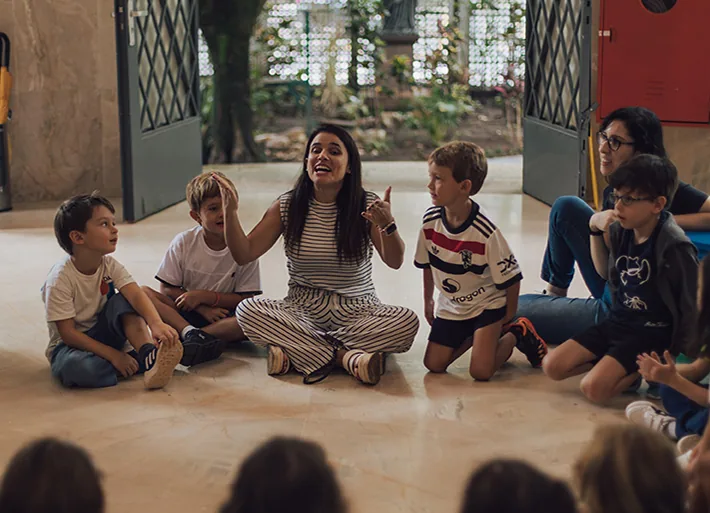
Immersion is not a language-teaching method: it is a decision about the entire curriculum. When the second language stops being a subject and becomes the medium for mathematics, science and history, what changes is not the English class — it is the school.
At the bilingual schools in the SEB ecosystem, this starts early. In early childhood education, children do not “study” English: they play, sing, solve conflicts and discover the world in both languages, and the balance between them is planned year by year.
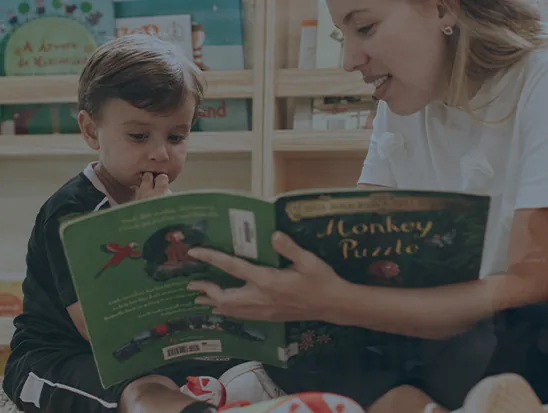
The teacher is the first teaching resource
Immersion requires teachers who master both the language and the subject. A science teacher who teaches in English does not translate the lesson they would give in Portuguese: they plan it so that vocabulary appears exactly when the concept is needed, not in a list to memorise.
That is why ongoing teacher training matters as much as materials. Pedagogical teams observe lessons, watch how students use the language and adjust planning every term.
The day a student argues with a classmate, in English, about whether the answer to a problem is right, we know the language has stopped being a subject.

Mariana Alves
Pedagogical coordinator
What families can notice at home
The signs appear sooner than expected: children mix both languages in the same sentence, sing songs from school, correct their parents’ pronunciation. This is not confusion — it is the brain organising two systems at once.
Most importantly, the language should never become a source of pressure. Reading together, watching cartoons in the original language and asking what they learned today, without demanding an answer in English, supports what the school builds during the week.