

What a second language does to memory
- Author
- SEB Education
- Category
- Bilingual Education
- Reading time
- 5 min read
Share


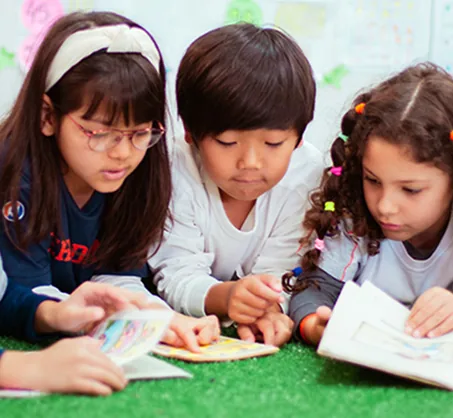
Every time a bilingual child speaks, their brain makes a silent choice: which of the two languages to use right now. This small exercise, repeated thousands of times a day, is what researchers call executive control — and it is not only useful for language.
Studies in cognitive psychology link early bilingualism to better performance in tasks that require holding one piece of information in mind while ignoring another. It is the same skill used to solve a multi-step maths problem or follow a long instruction.
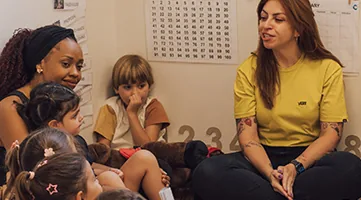
Working memory is not rote learning
It is worth drawing a distinction. Working memory is the ability to hold and manipulate information for a few seconds — it has nothing to do with memorising lists. It lets a child remember the beginning of a sentence while listening to the end, and it is what switching between languages seems to exercise.
This does not make bilingualism a shortcut to top grades, and no serious research promises that. The benefit shows up as flexibility: changing strategy when the first one fails and paying attention to what matters amid distractions.
Why starting early makes a difference
Young children learn a second language by using it, without feeling that they are studying. The more natural the exposure — through play, stories and routines — the more the brain treats both languages as everyday tools rather than school subjects.
At home, the rule is simple: exposure with affection. Bedtime stories, songs and pressure-free conversations are worth more than vocabulary drills.